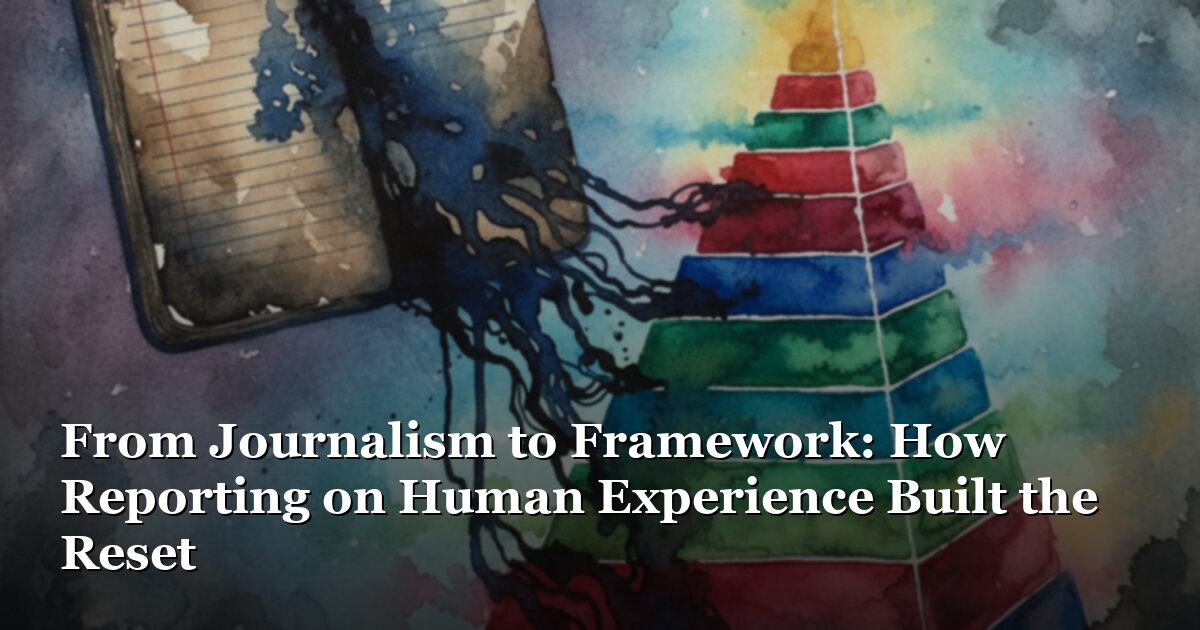
I didn’t set out to build a wellness framework. I set out to understand why musicians talked about music differently than everyone else. As a journalist, I spent years interviewing artists: Russell Simmons, 9th Wonder, Carl Thomas, and dozens of others across the music industry. I wrote for Red Bull and landed features in Macy’s campaigns. I graduated from Florida A&M University with the tools of a storyteller and the instincts of someone who listens for what people aren’t saying out loud. But the interviews kept revealing a pattern I wasn’t looking for.
The pattern in the conversations
Musicians didn’t talk about music as entertainment. They talked about it as survival, as processing, as the thing that got them through the specific feelings they couldn’t articulate any other way. One artist would describe using a particular song to ground themselves before performing (that’s fear, Level 1). Another would talk about writing music to process guilt they’d been carrying for years (Level 2). The language was different every time, but the structure was the same. Music was functioning as a tool for emotional processing, and the way it worked mapped to a progression I started recognizing from my own reading: Maslow’s hierarchy, the chakra system, Taoist philosophy. Different traditions describing the same human architecture.
From observation to system
I did what a good journalist does: I followed the story. I started mapping the connections between what artists described and what existing frameworks (psychological, spiritual, philosophical) already articulated. The result was a seven-level system that uses music as the vehicle for moving through fear, guilt, shame, grief, inauthenticity, confusion, and ego. Each level corresponds to a core human challenge. Each has a sonic signature (the kind of music that resonates with that level’s emotional frequency) and a practice: a deliberate way of using music to address what that level surfaces. The framework became the book, Music & Meditation: A Curated Collection of Positive Vibrations. The book became a workshop. The workshop became a full programming suite that organizations now bring in for their teams.
Cultural range and genuine warmth
My background gives the framework something that shapes every room I walk into: cultural range and genuine warmth. I’m a journalist and storyteller who figured out that the thing we all already do (listen to music) can become a structured practice for managing the stress and disconnection that mid-career professionals carry. The FAMU experience, the years in music journalism, the deep listening skills built through hundreds of interviews: all of that shows up in how I facilitate. When I walk a room through the seven levels, it doesn’t feel like corporate training. It feels like a conversation with someone who genuinely understands both the music and the mess.
The framework lives in you
The origin story matters because it explains why Music & Meditation feels different from other wellness programming. It was pulled from real conversations with real artists about the real function of music in human life, then structured into a system anyone can use. You don’t need to be a musician. You don’t need to meditate already. You need to listen to music (you already do) and be willing to do it with intention. — The framework started with a question. The Reset Score starts with twenty-one of them.